- The Fight Back! Newsletter
- Posts
- Buying a PC: 1983 vs. 2025
Buying a PC: 1983 vs. 2025
+ How to avoid getting ripped off

Amanda Horowitz, MA, MS
April 28, 2025
I’m refreshing the newsletter format and would like to hear what you think. There’s a quick poll at the end to share your feedback. Last week, the David Horowitz hostage incident went viral, surpassing 18 million views on X and Instagram. Thank you for your patience while I navigated that. I plan to cover it in a future newsletter. Going forward, you will receive this newsletter twice a month, with occasional extra issues. Thank you for subscribing!
The year was 1983, and the future had arrived.
President Ronald Reagan announced a missile defense plan to protect the U.S., a plan critics dubbed “Star Wars” due to its proposed use of space-based technology. Michael Jackson performed his first moonwalk on television. And Apple co-founder Steve Jobs predicted that one day, every home would have a computer.
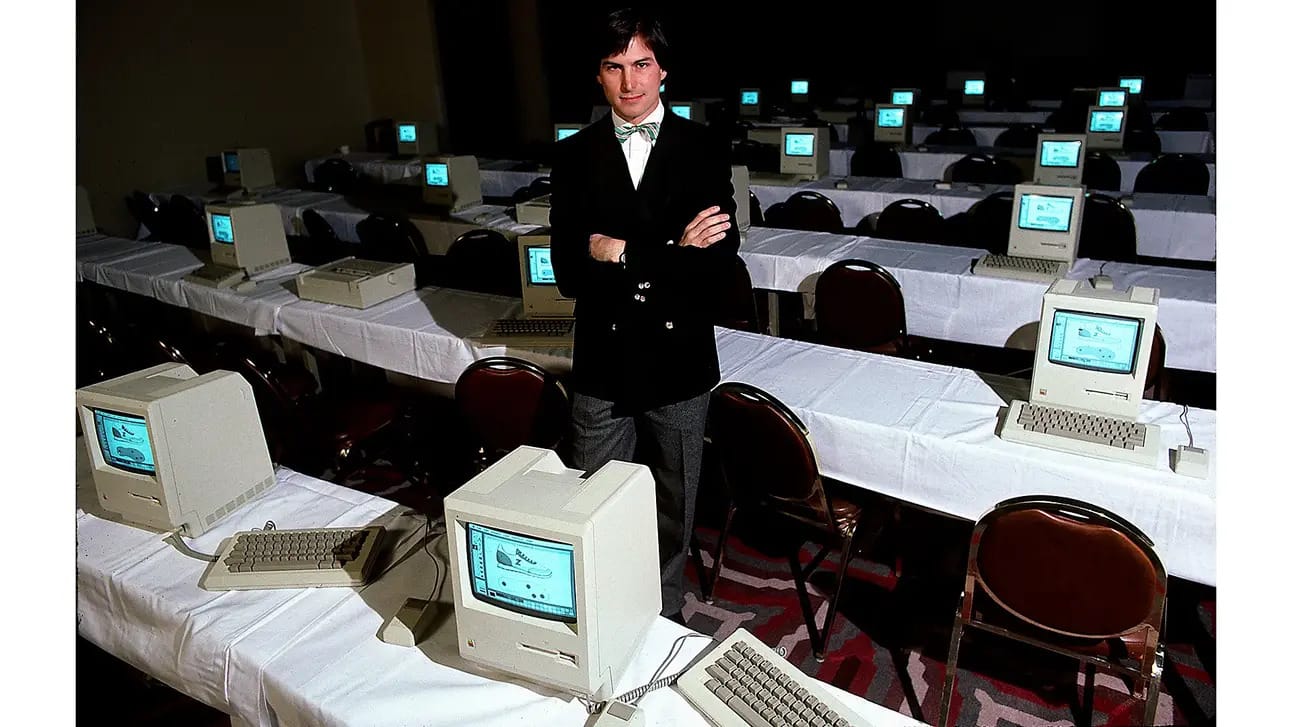
Steve Jobs with a room full of Apple computers in 1984, the same year the original personal computer, the Apple Macintosh 128K, was introduced.
The PC takeover
Personal computers were hitting the mainstream. You couldn’t exist without knowing something about them. Students, gamers and business professionals alike were investing in what was becoming a basic tool of modern life. PCs could teach your kids how to spell or teach you a foreign language. They could help you organize a home filing system, write and edit letters, and print them out at the push of a button. The concept of a talking computer was still a novelty back then.

Time Magazine: January 1983
The novelty of personal computers caused confusion, anxiety and “computerphobia,” leaving some consumers struggling to keep up and make sense of buying a PC. Experts believed the personal computing boom had no end in sight. It was the start of a new era that would ultimately pave the way for a post-COVID work-from-home world, almost 40 years later.
Fight Back! Flashback
A 1983 Fight Back! report warned viewers that buying a PC was so confusing and frustrating that it might require a computer just to figure it out. As you can see in the clip below, back then, you had to head to a physical store and deal with a dizzying number of add-ons.
For perspective, when adjusted for inflation, the computer models featured on Fight Back! would cost between $200 and $26,000 in 2025. The Texas Instruments TI-99/4A, for example, which became the best-selling home computer in America, cost over $2,000 in 1983 with all the add-ons. That’s the equivalent of about $6,500 today. You can now find vintage TI-99/4A computers on eBay in various conditions, selling for $700 or less.
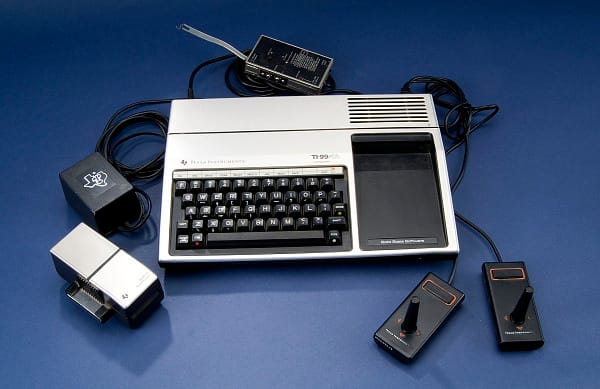
Texas Instruments TI-99/4A with add-ons. Photo: Smithsonian National Museum of American History
The PC market battle
In a 1983 Washington Post article, it was noted that consumers who weren’t rejecting technology were getting savvier about their PC purchases as more products flooded the market. Technology was advancing so fast that some gadgets were already outdated by the time they hit store shelves. Companies were battling for shelf space and market attention. Business Week warned in a survey of the industry that most of them wouldn’t survive.
It was a PC gold rush, with more than 150 companies vying to claim a piece of the market. Startups popped up alongside tech giants like Xerox, Digital Equipment, and Hewlett-Packard, all hoping to ride the wave. But Commodore and IBM pulled ahead and even Apple struggled to keep up with IBM’s dominance, according to The New York Times.

The IBM PC-XT, March 1983. Photo: IBM.com
Total retail sales for PCs in America reached $7.6 billion in 1982. In 1983, sales were expected to nearly double to $14.6 billion with the greatest growth projected in the higher-priced range — systems selling for more than $3,000, the equivalent of almost $10,000 today.
Steve Jobs was right
By the year 2000, census figures showed that 51 percent of households in America had one or more computers. That number is projected to hit almost 97 percent this year. Over 80 million personal computers were sold in the U.S. in the past year alone, according to market data.

The Internet of Things has been our reality for quite some time, and we live in a world where our computers are in our pockets, on our wrists, and in our cars. New technologies continue to reshape how we live and do business. AI is driving the next wave of change. The World Economic Forum predicts that by 2030, 70 percent of the skills used in most jobs will change because of it. Companies are building brain-computer interfaces, and humanoid robots are running half marathons. What was once called “computerphobia” has evolved into a broader “technophobia”— and on the other end of the spectrum, an increasing digital dependency. And somehow, buying a PC in 2025 still feels just as confusing and frustrating to some people as it did in 1983.
Buying a PC (Without needing a Ph.D.)
In 1983, you might have needed a computer to figure out which computer to buy. But today, it feels like you need a computer scientist just to make sense of the options. So, how can you protect yourself from making an expensive mistake?
Computer and IT expert Jamison Lopez and I have put together some practical tips for buying a PC. Jamison is my go-to source for reliable technology advice and works hands-on with it every day, both in business and home settings. Here is what we think you should consider when buying a new PC:
Fight Back! Tips
Buy for your real needs. Skip unnecessary specs.
Prioritize user experience. Look for a quality screen, comfortable keyboard, long battery life, and a PC that stays cool and quiet. A PC that looks good on paper but runs hot, has a poor trackpad, or dies in three hours is a bad investment — no matter what the specs say.
Don’t fall for gimmicks. Touchscreens, 2-in-1s, RGB lights and 4K screens rarely add value for most users.
Avoid “port regret.” Ultra-thin PCs often lack ports, and needing adapters or dongles to plug things in gets annoying fast.
Choose upgradability. If your PC lets you upgrade RAM or swap the SSD, you can extend its lifespan and save money later. (For those unfamiliar: RAM, or Random Access Memory, is essentially short-term memory. An SSD, or Solid-State Drive, is a type of storage device.)
Check return and support options. Know how long you have to return the PC and how easy it is to reach support if something goes wrong.
Be skeptical of online reviews. Fake reviews aren’t always easy to spot, so look out for generic language, repetitive five-star ratings, or reviews that seem overly enthusiastic.
Ask for expert opinions. When deciding which PC to buy, visit a retailer and ask staff which models are returned the most (or least) and which ones have the most customer complaints. You can also ask in-store tech support, a local repair shop, or your company’s IT department for their opinions.
Consider going refurbished. Buying a certified refurbished PC directly from the manufacturer can save you money, but do the same research you would when buying a new one.
Look for deals — especially during back-to-school season, major holidays, or right after new models launch.
Get an extended warranty if you plan to keep the PC after the manufacturer’s warranty expires. Always read the fine print so you know what a warranty actually covers.
What felt futuristic in 1983 feels like ancient life now. But some things haven’t changed: tech still moves at lightning speed, companies are still fighting for our business, and we’re still trying to figure out which PCs are worth buying.
Reply